








Quick fitting and removal Ergonomics & Safety ISO 13284:2022...
FRU-SRF
Station & Fork extensions
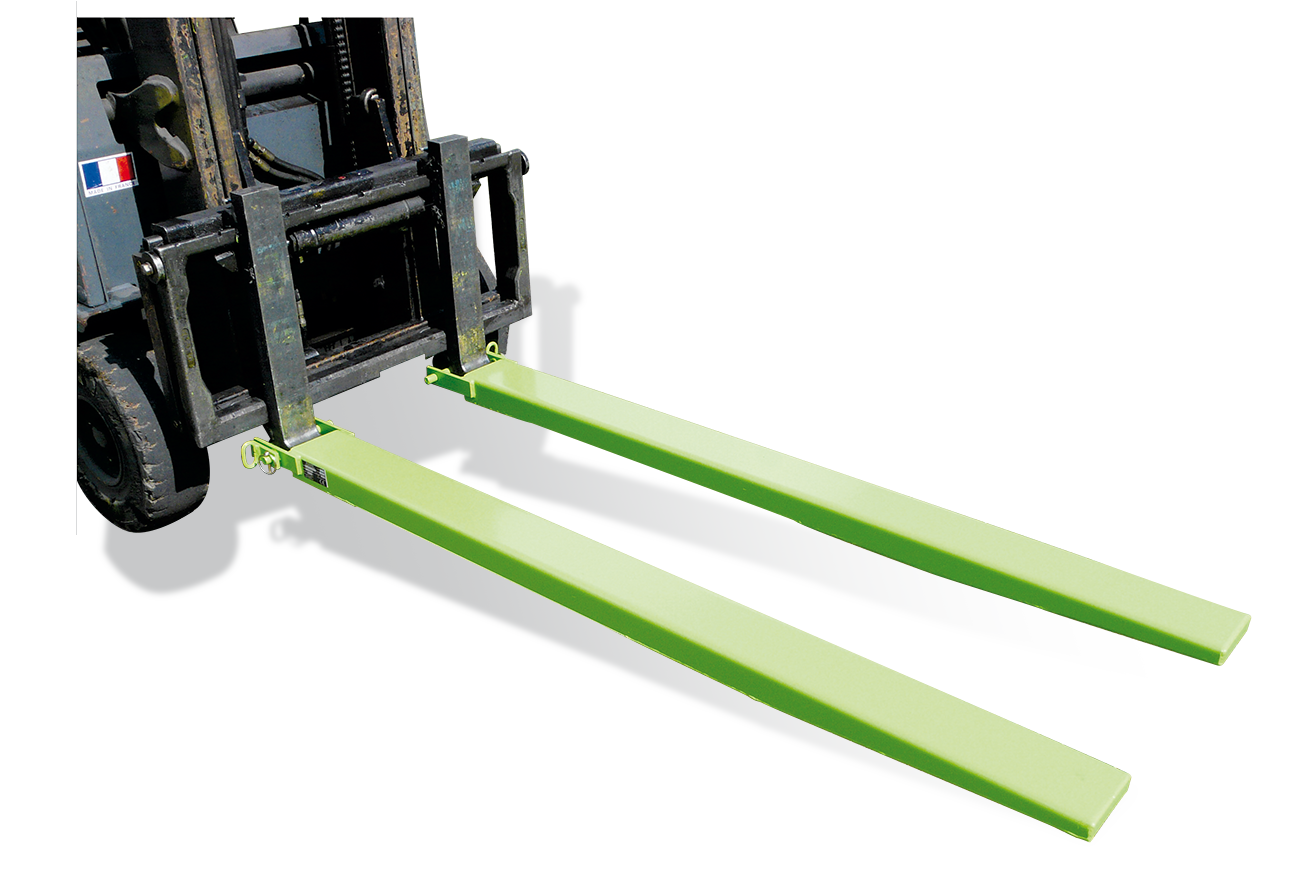
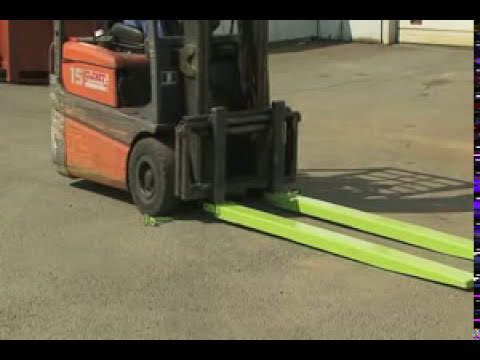
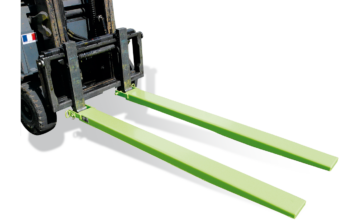
Quick and secure fit. Reinforced fork sleeves in th. 5 mm. Length according to the ISO 13284 standard.

versatile

reinforced
CAPACITY & DIMENSIONS
AVAILABLE OPTIONS
ALL PHOTOS

| Max. fork dimensions | Extension sleeve aperture FR | Length (mm) B1 | Weight kg | Reference | |
|---|---|---|---|---|---|
| 40 x 80 | 50 x 100 | 1500 | 38 | FRP10015 |
Select one or more product references to request a quote |
| 45 x 100 | 55 x 120 | 1700 | 49 | FRP12017 |
Select one or more product references to request a quote |
| 55 x 120 | 2000 | 58 | FRP12020 |
Select one or more product references to request a quote |
|
| 45 x 125 | 60 x 145 | 1700 | 57 | FRP14517 |
Select one or more product references to request a quote |
| 60 x 145 | 2000 | 67 | FRP14520 |
Select one or more product references to request a quote |
|
| 50 x 150 | 65 x 170 | 2000 | 77 | FRP17020 |
Select one or more product references to request a quote |
Do you need to transport long loads: metal profiles, plasterboard, carpentry timber, or out-of-gauge pallets? Goubard forklift fork extensions slip directly onto the forks of your forklift truck, extending the useful length by up to 2,000 mm. Six references cover fork cross-sections from 40 x 80 to 50 x 150 mm, all compliant with the ISO 13284 standard. Manufactured in France from 5 mm thick steel, sold in pairs, shipped within 10 days.
Adding a fork extension is not without consequence for your lifting capacity. By extending the forks, you shift the load center of gravity forward from the carriage. This shift moves the barycenter away from the drive axle and significantly reduces the truck’s residual capacity.
Indicative example (to be verified on your forklift’s capacity plate): a truck nominally capable of lifting 2,500 kg at 500 mm from the carriage will only be able to lift approximately 1,800 to 2,000 kg once equipped with extensions bringing the load center to 900 mm. The longer the extension, the greater the loss in capacity.
Consult your forklift’s load chart: it indicates the capacity for each load center distance (in mm). Note the value corresponding to the new load center obtained with the extensions. Never exceed this residual value, even if it is lower than the 2,000 kg load capacity distributed across the pair of sleeves.
See also our offering of forklift end of fork protectors to protect your material handling equipment.
The ISO 13284 standard governs the use of fork extensions for forklift trucks. In particular, it sets a maximum allowable length based on the length of the original parent forks. Complying with this rule is essential to ensure overall stability and prevent any risk of tipping or load slippage.
The formula defined by the ISO 13284 standard is as follows:
Maximum extension length (B1) = Original fork length (B) ÷ 0.6
Numerical example: if your forklift forks measure 1,200 mm, the maximum allowable length for the extensions is 1,200 ÷ 0.6 = 2,000 mm. If your forks are 1,000 mm long, the maximum length will be 1,000 ÷ 0.6 = 1,667 mm: you would then select the 1,500 mm model.
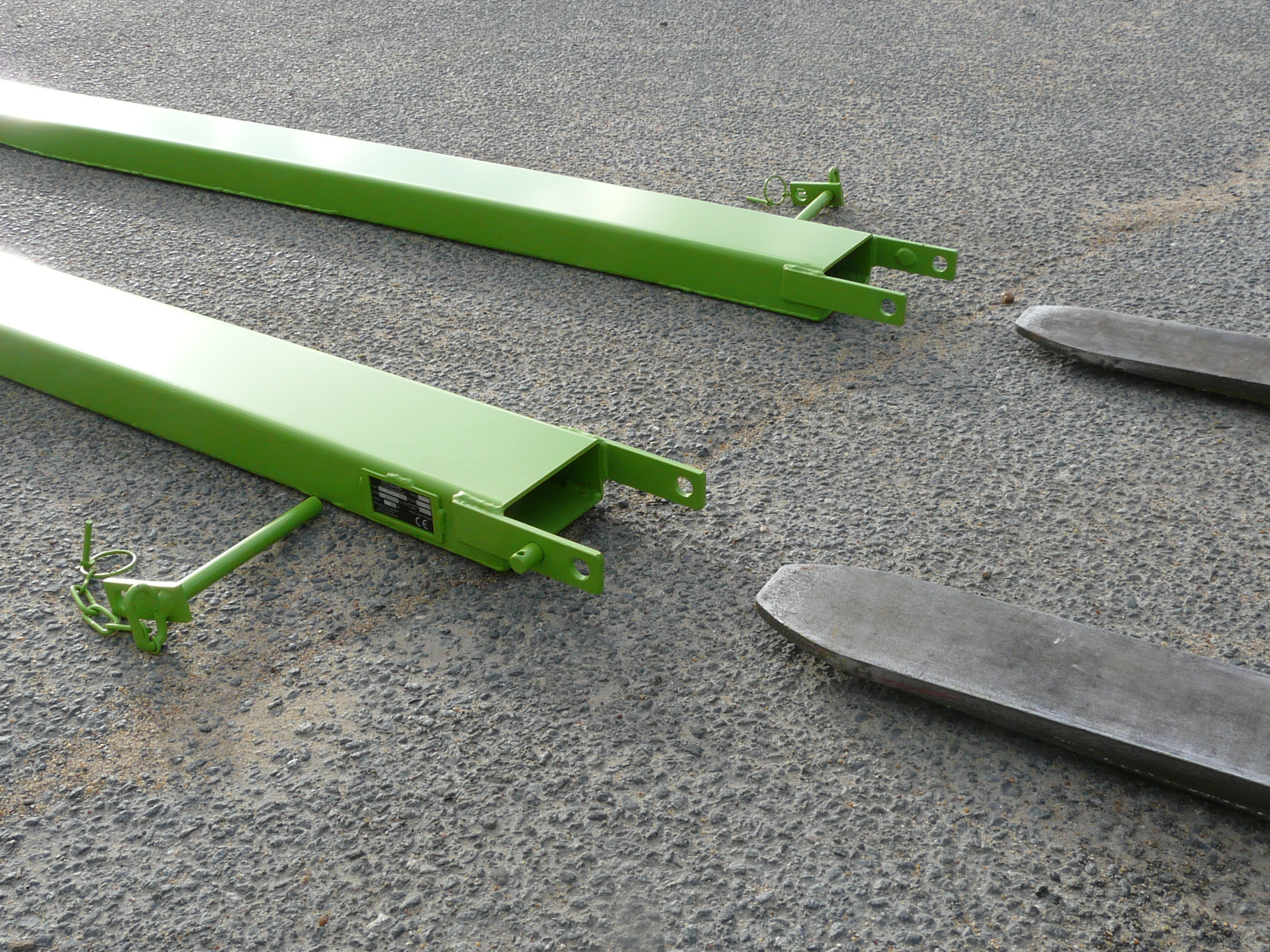
Before placing an order, measure the space available behind the fork heel. The removable locking pin of the extension sleeves requires sufficient clearance to be inserted and removed easily. Refer to the Goubard technical data sheet for the exact required dimensions.
The table below helps you identify the extension length compatible with your original forks:
| Original fork length (B) | Maximum extension length per ISO 13284 (B1) | Compatible Goubard reference(s) |
|---|---|---|
| 900 mm | 1,500 mm | FRP10015 |
| 1,000 mm | 1,667 mm | FRP10015 / FRP12017 |
| 1,020 mm | 1,700 mm | FRP12017 / FRP14517 |
| 1,200 mm | 2,000 mm | FRP12020 / FRP14520 / FRP17020 |
The extension sleeve slides over the original fork; therefore, the internal cross-section of the sleeve must be slightly larger than your fork section. Too much play risks creating unwanted movement; a sleeve that is too tight will not slide on. Here is the selection guide table:
| Max measured fork section (Height x Width) | Internal sleeve cross-section | Available length(s) | Goubard Reference | Weight (kg/pair) |
|---|---|---|---|---|
| 40 x 80 mm | 50 x 100 mm | 1,500 mm | FRP10015 | 38 kg |
| 45 x 100 mm | 55 x 120 mm | 1,700 mm | FRP12017 | 49 kg |
| 45 x 100 mm | 55 x 120 mm | 2,000 mm | FRP12020 | 58 kg |
| 45 x 125 mm | 60 x 145 mm | 1,700 mm | FRP14517 | 57 kg |
| 45 x 125 mm | 60 x 145 mm | 2,000 mm | FRP14520 | 67 kg |
| 50 x 150 mm | 65 x 170 mm | 2,000 mm | FRP17020 | 77 kg |
How to measure your fork cross-section: using a calliper or tape measure, measure the height (vertical dimension) and then the width (horizontal dimension) of the fork, approximately 200 mm from the heel. These two values form the section, expressed in millimetres (height x width). Then refer to the table above to identify the appropriate reference.
If your fork cross-section does not match any of the references in the table, or if you need an open-heel sleeve to facilitate side loading, Goubard offers custom manufacturing. Sleeves with specific cross-sections, special lengths, or custom openings can be produced according to your specifications. Contact our team for a tailored quote.
Goubard fork extensions are designed for quick and secure attachment to original forks. Here are the essential points to know before and during use:
Installing the fork extensions is simple and requires no special tools. A short video demonstration is available on the Goubard product page.
The ISO 13284 standard governs the design, testing, and operation of forklift fork extensions. It notably dictates:
Three attachments can address your oversized load handling requirements. They are not interchangeable. The comparison table below helps you select the right tool for your application.
| Criterion | Fork Extensions (FR) | Custom Fork Spreader (FQ) | Fork Extension Rack & Extensions (FRU-SRF) |
|---|---|---|---|
| Primary function | Extend forks for long loads | Increase fork spread for wide loads | Extend forks and store sleeves ergonomically |
| Ideal for | Profiles, timber, plasterboard, long pallets | Wide-track loads, panels, frames | Intensive use, frequent configuration changes |
| Installation | Manual, removable pin | Custom-built, adapted mounting | Fast with integrated rack system |
| Standard | ISO 13284 | Goubard custom design | ISO 13284 |
| Open-heel sleeve option? | Custom manufacturing only | Not applicable | No |
In summary: Choose fork extensions to extend the reach of your forklift forks for long loads. Opt for a fork spreader if load width is the issue, and select the rack & extension station if you frequently change configurations and require an ergonomic solution. See also our box rotators for forklifts.
Fork extensions are particularly suited to bulky and long loads that original forks cannot support over their full length. Here are four common scenarios where their use is justified.
Plasterboard and building materials: Long plasterboards (2,500 to 3,000 mm) cannot be transported safely with short forks. Extensions provide support along the full length of the board, preventing sagging or buckling.
Metal profiles and tubes: Steel bars, square or rectangular tubing, angle irons, and other profiles packaged in lengths exceeding 2 metres require support at two distant points. The 2,000 mm extensions (references FRP12020, FRP14520, FRP17020) are especially suited for these bulky loads.
Long and non-standard pallets: Certain industries (glazing, joinery, heavy manufacturing) use pallets 2,400 mm or longer. Extensions allow your forklift to provide balanced support underneath the load, eliminating instability caused by excessive overhang.
Joinery and structural timber: Beams, joists, rafters, and timber planks in long lengths are often handled in bundles. Fork extensions provide the necessary usable length to pick up these bundles across their entire base, reducing the risk of slippage and deflection during transport.
Can I install fork extensions on any forklift truck?
No. Compatibility depends on the fork cross-section, the original fork length, and above all, the residual capacity indicated on the truck’s rating plate. Always check these three factors before ordering a pair of extensions.
What is the maximum load capacity for a pair of extensions?
The maximum capacity of 2,000 kg is distributed across the pair of extensions at the tips. However, this limit applies only if your truck can lift that load at the corresponding load center. Always refer to your forklift’s capacity plate for binding limits.
Are extensions sold in pairs? What is the delivery lead time?
Yes, Goubard fork extensions are sold in pairs. All references FRP10015 to FRP17020 are available on short lead times, shipping within 10 working days from our factory in France.
Is a re-certification or inspection required after adding extensions?
Yes. Adding extensions modifies the operating conditions of the forklift and can affect its stability and residual capacity. An inspection by a certified body is recommended, and records must be logged in the truck’s safety register. Mandatory periodic inspections continue to apply.
Can we order custom open-heel or specific cross-section extensions?
Yes. Goubard offers custom manufacturing for non-standard cross-sections, specific lengths, or open-bottom sleeve designs to facilitate side loading. Contact our sales team with your original fork dimensions.
What is the difference between standard extensions and the extension rack system?
Standard fork extensions are simple attachments that slide manually over original forks. The rack and extension system includes an ergonomic storage and mounting structure, ideal for intensive applications requiring frequent configuration changes. Consult the comparison table above to choose the best solution for your facility.

On your quote request manually add
in the comments, the option you need
Other color




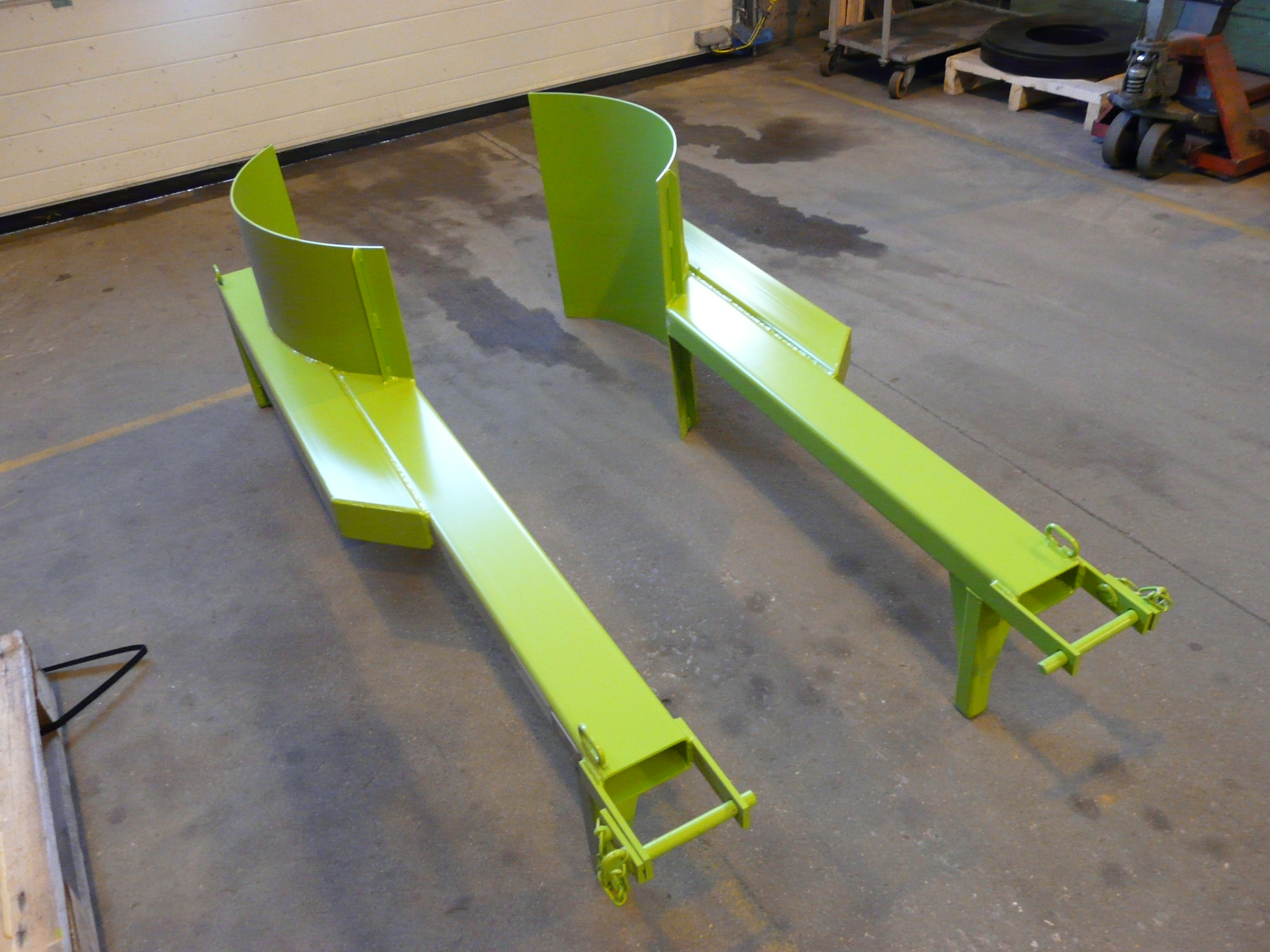

To be sure of your choice, Goubard offers you the possibility of testing before committing yourself. 95% of customers who test our products buy them later!

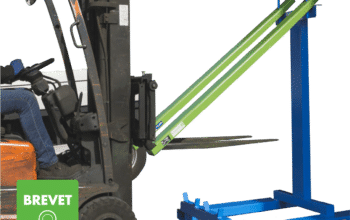
Station & Fork extensions
Quick fitting and removal Ergonomics & Safety ISO 13284:2022...

Easel maximum load 3000 kg
For safely handling and transporting joinery, plates,...
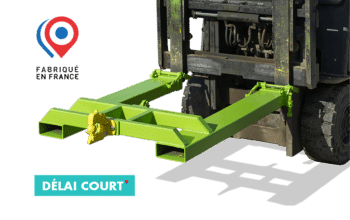
Muti-function hitching
All-in-one tool – inspection body approved For fitting...

Lifting jib 1 hook
Quickly transforms your forklift into a lifting...

Big-bag loader A
For transporting Big-Bags. Direct mounting on forks of...

Big-bag loader upper grip load 2t on 2 hooks
Safe handling of Big-Bags. Direct mounting on forks. 2...
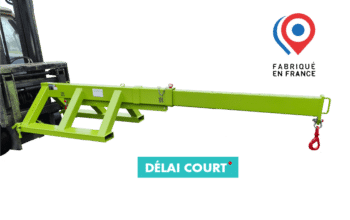
Adjustable lifting jib
Quick mounting on forks. Approved by an inspection...
Easel maximum load 1500 kg
For safely handling and transporting joinery, plates,...

Easel maximum load 800 kg
For safely handling and transporting joinery, plates,...
the reference has been
added to your request!
the custom made product has been
added to your request!
LOGIN